
Learn to Respond When Seconds Matter
AED Training
Use the Device That Restarts a Heart
AED Training in Yakima, Cle Elum, and Ellensburg for workplaces and facilities required to maintain cardiac emergency readiness
Cascadian Rhythm teaches you how to operate an automated external defibrillator during a cardiac arrest so you can deliver a shock without delay. You open the device, apply adhesive electrode pads to bare skin following the diagram printed on each pad, and follow the voice prompts that guide rhythm analysis and shock delivery. The training uses real AED units so you become familiar with the exact sounds, instructions, and button sequences you will encounter during an emergency.
The course emphasizes rapid response because every minute without defibrillation reduces survival probability by seven to ten percent. You practice clearing the patient before shock delivery, resuming CPR immediately after the shock, and coordinating with others who may be calling emergency services or retrieving additional equipment.
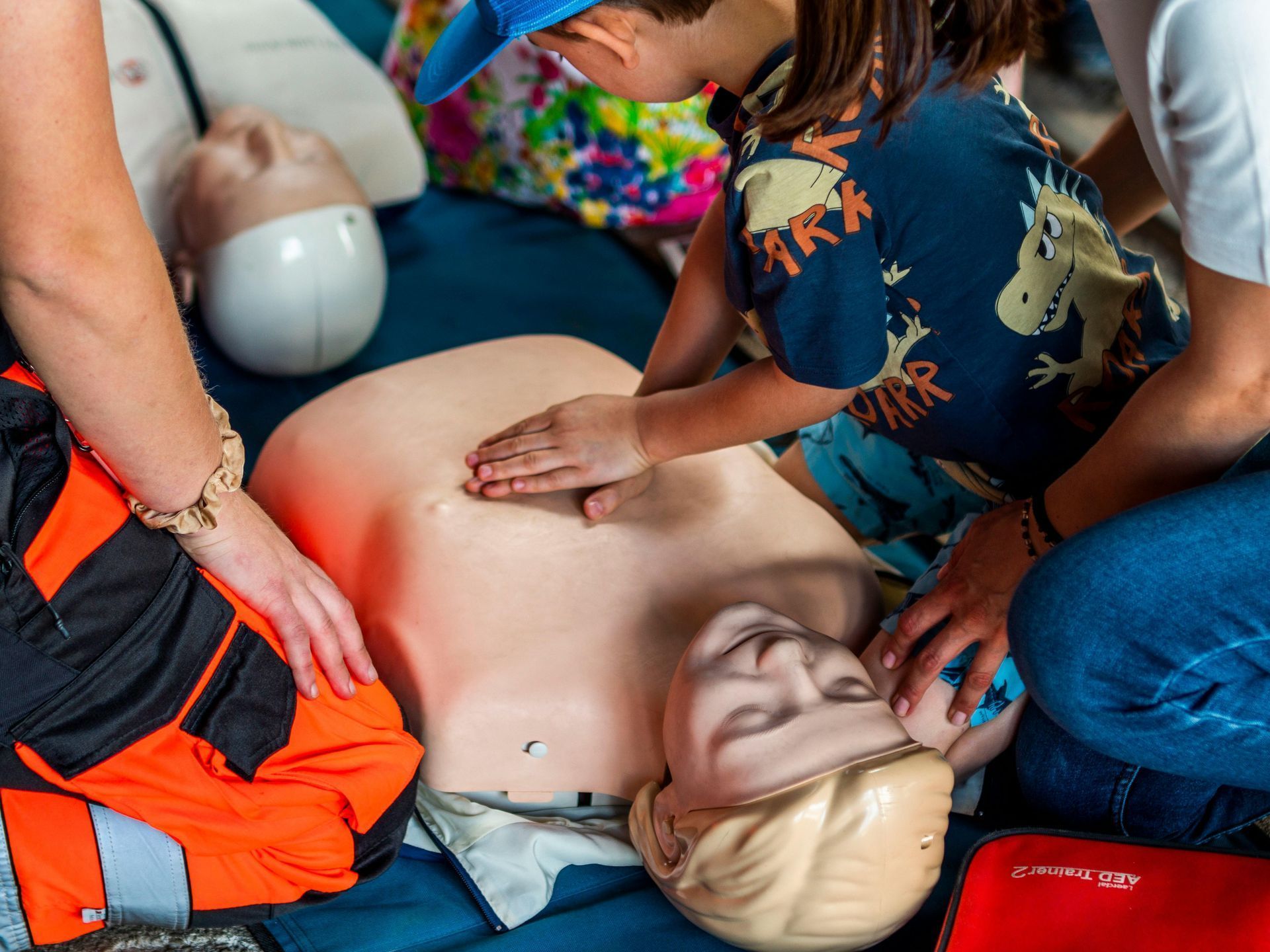
Instructors demonstrate common errors such as placing pads over clothing, failing to dry wet skin, or hesitating during the shock prompt. Schedule a session in Yakima, Cle Elum, or Ellensburg to complete standalone AED instruction or combine it with full CPR certification.
Insert Title
Insert Content
How long does it take to train a full team?
What People Ask About AED Use
Participants in Yakima, Cle Elum, and Ellensburg frequently want to know when to apply an AED, how the device determines whether a shock is needed, and what steps follow the initial intervention.
What does the AED do when you turn it on?
The device announces step-by-step voice instructions, beginning with pad placement, then analyzes the heart rhythm to determine if a shock will restore normal electrical activity.
How do you know if the patient needs a shock?
The AED decides this automatically by detecting shockable rhythms such as ventricular fibrillation or pulseless ventricular tachycardia, and it will not allow a shock if the rhythm is non-shockable.
When should you stop using the AED?
You continue the analyze-shock-CPR cycle until emergency responders arrive, the patient begins breathing normally, or the scene becomes unsafe to continue.
Why is it important to keep everyone clear during analysis?
Movement or contact during rhythm detection can create electrical interference that prevents accurate analysis, delaying the shock and reducing survival chances.
WHAT HAPPENS IF YOU USE AN AED IN THE WINTER WEATHER OF YAKIMA, CLE ELUM, OR ELLENSBURG?
You must move the patient indoors or to a dry surface if possible, remove wet clothing, and dry the chest thoroughly before applying pads to ensure proper adhesion and conductivity.
Cascadian Rhythm offers AED training as part of comprehensive CPR courses or as a focused session for teams updating their emergency response skills. Reach out to arrange instruction tailored to your facility's equipment and protocols.